Blackjack and table games
B333 includes Blackjack and table games as broad categories; named supplier rules are examples.

B333 · Game topics and rules
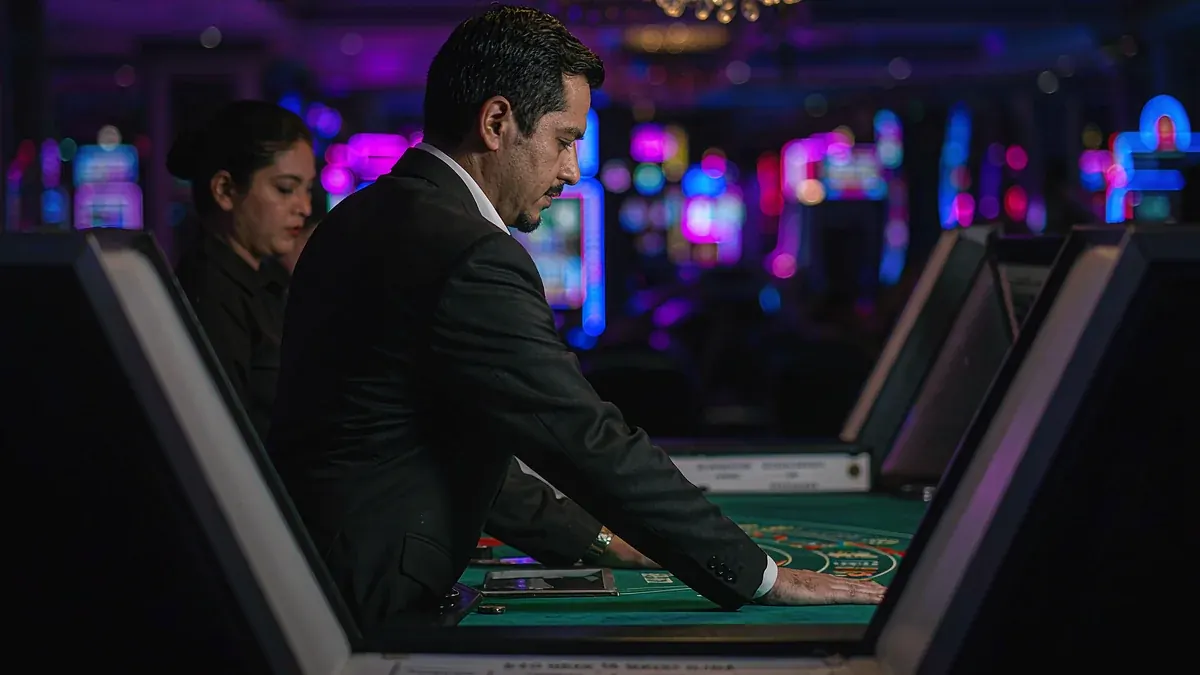
Blackjack is a sequence of hand decisions. The player sees cards, chooses an allowed action, and compares the final hand with the dealer under that table's rules.
This page explains game formats and rules; it is not a playable lobby. Check the relevant service for current game availability and the exact version in use.
B333 includes Blackjack and table games as broad categories; named supplier rules are examples.
These are named B333 sports topics, with distinct event periods.
Suppose a player has a total of 18. Stand preserves 18; Hit asks for another card and can improve the total or push it past 21. This is a decision illustration, not a recommendation that one action always wins.
Evolution's regular live Blackjack also describes Double Down, Split and optional insurance. Eligibility and settlement depend on the actual table. A visually similar button in a different version may carry an additional rule.
Evolution lists Infinite, Free Bet and Power Blackjack as distinct variants. Pragmatic Play's Free Bet Blackjack has a Push on 22 exception. The exception belongs to that named version and cannot be assigned to every Blackjack table.
Before a hand begins, look for dealer drawing rules, payout wording and the effect of each allowed action. A broad live-casino category cannot supply those details.
Consider a rugby side leading 12–7 at half-time but losing 19–22 at full time. The half-time leader and match winner are different result questions. Unlike a Blackjack total, those numbers refer to points accumulated across match periods.
Read the period alongside a live sports selection. Do not interpret a half-time lead as a final outcome, just as a Blackjack hand of 18 should not be treated as already settled before the dealer's hand is complete.
No. Hit requests another card and changes the hand; Stand preserves the current total.
No. Push on 22 is a named variant exception, not a universal rule.
No. Later scoring can reverse the result; read the period named by the question.
B333 Login · Responsible gambling
Open an article for rules, worked examples and common questions, with the source version identified.
 Blackjack: totals, decisions and table variantsRead hard and soft hands, compare with the dealer, and distinguish classic actions from Free Bet Blackjack exceptions.Read full article →European roulette: read the wheel and the betUnderstand single-zero roulette, inside and outside coverage, overlapping chips, payouts and preset layouts through worked spins.Read full article →
 Reading a Cricket Score: Overs, No-balls and ResultsLearn how to read wickets and overs, count a no-ball correctly, and distinguish a score update from the match result.Read full article →